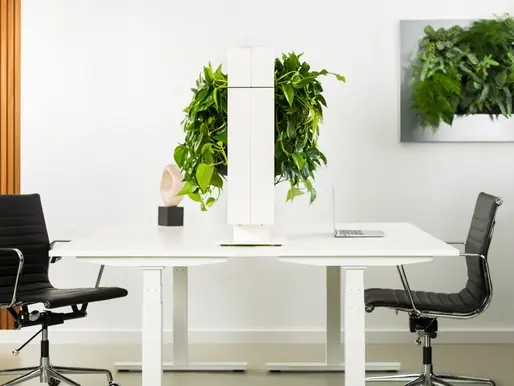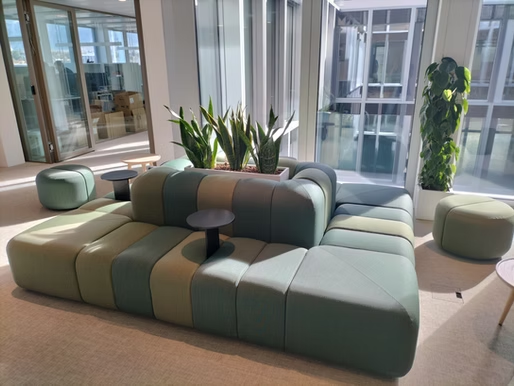
The office is a room where we spend more and more time. Sometimes synonymous with stress and headaches, we seek alternatives to this daily routine. Opt for indoor plants that, in addition to being aesthetic, have many virtues and make your days more pleasant. We will see which varieties of air-purifying plants to install to improve our health and well-being.
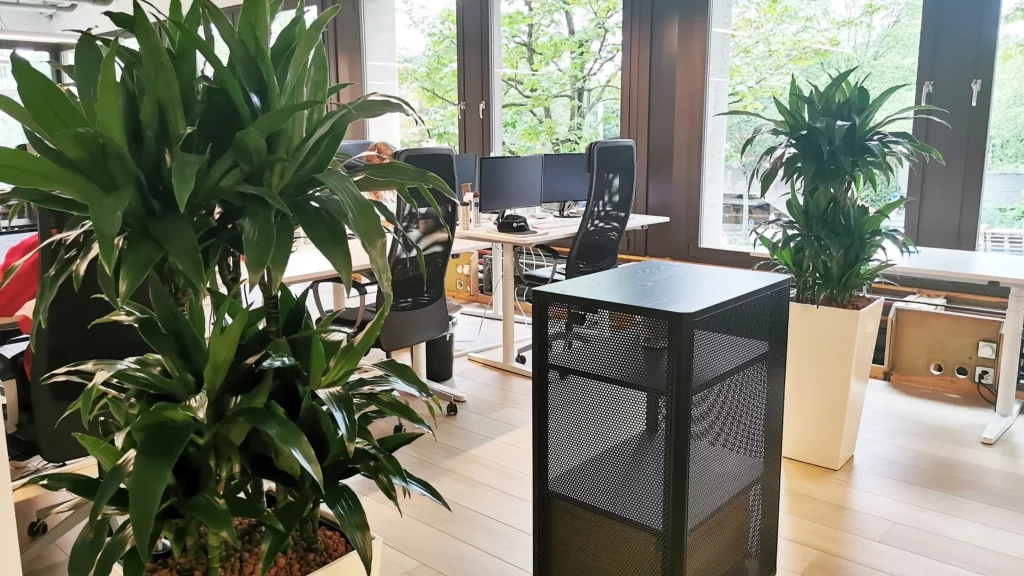
Air-purifying plants: how do they work?
At home as well as in the office, we are faced with sources of pollution. Visible or not, these harmful substances come from various origins: paints, carpets, electronic devices, or cleaning products. This is where indoor plants come into play as they purify our air: they absorb harmful substances from the ambient air (for example, carbon monoxide) through their leaves and roots and transform them into oxygen. This phenomenon is called photosynthesis. The result: working in a healthier environment and being more productive.
What are the sources of pollution?
There are several types of toxic pollutants. First, there are VOCs (Volatile Organic Compounds) responsible for allergies and irritations. In the long term, this can be dangerous and cause cancers. These pollutants are numerous, and the risk in companies, especially in open spaces, is that they multiply. Here are some of the most common pollutants:
➢ Trichloroethylene – found in printing inks, paints, and varnishes
➢ Formaldehyde – found in paper bags, disposable tissues, and paper towels
➢ Benzene – found in cigarette smoke, inks, and DIY products
➢ Xylene – found in rubber, leather, and paint
➢ Ammonia – found in household products and DIY products
There are also pollutants like carbon monoxide, emitted by heating devices or electromagnetic waves. These are all the devices we use daily, such as computers, phones, or televisions. It is difficult to avoid them, but air-purifying plants play a role as they clean the air.
Our selection of air-purifying plants
Easy-to-maintain plants
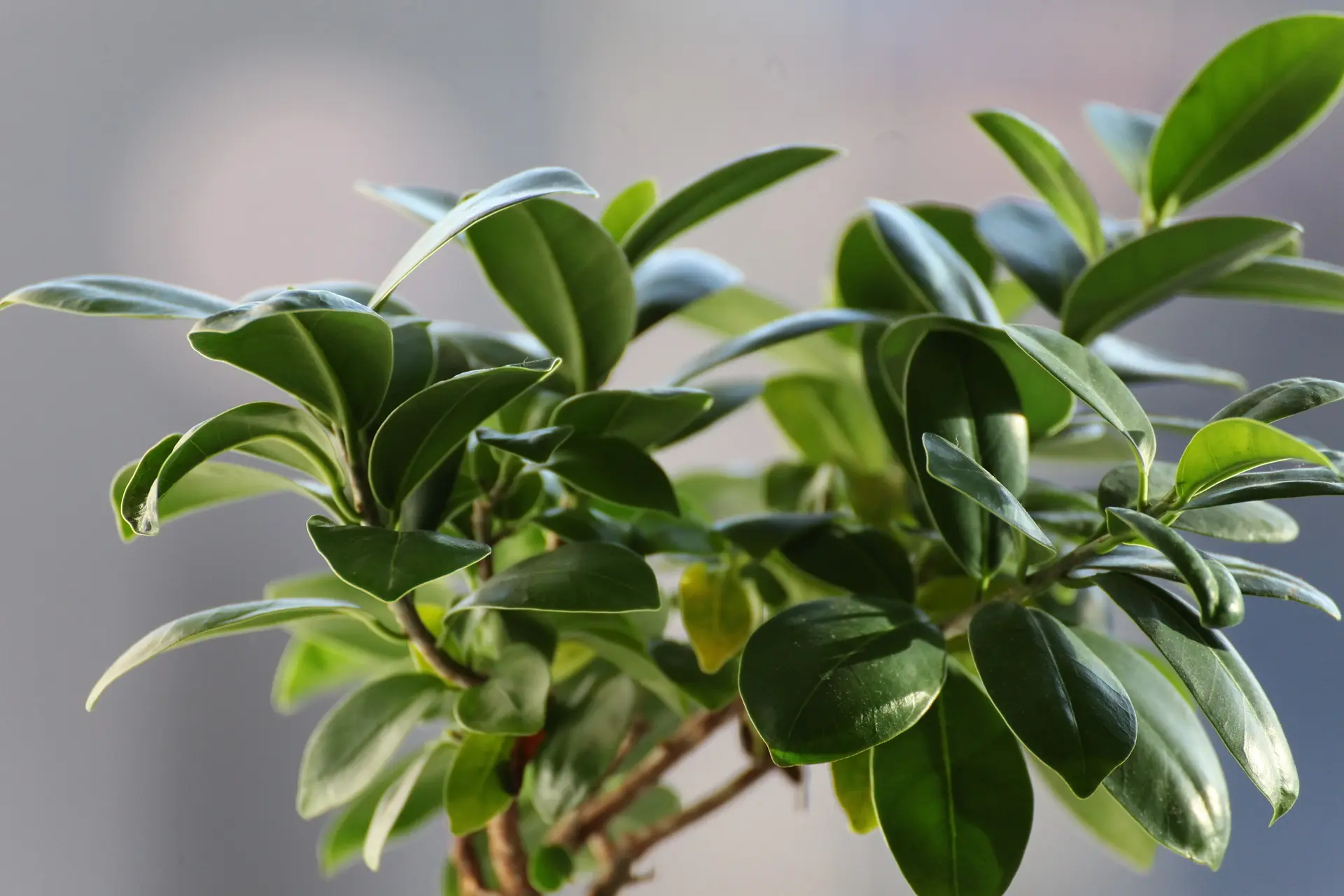
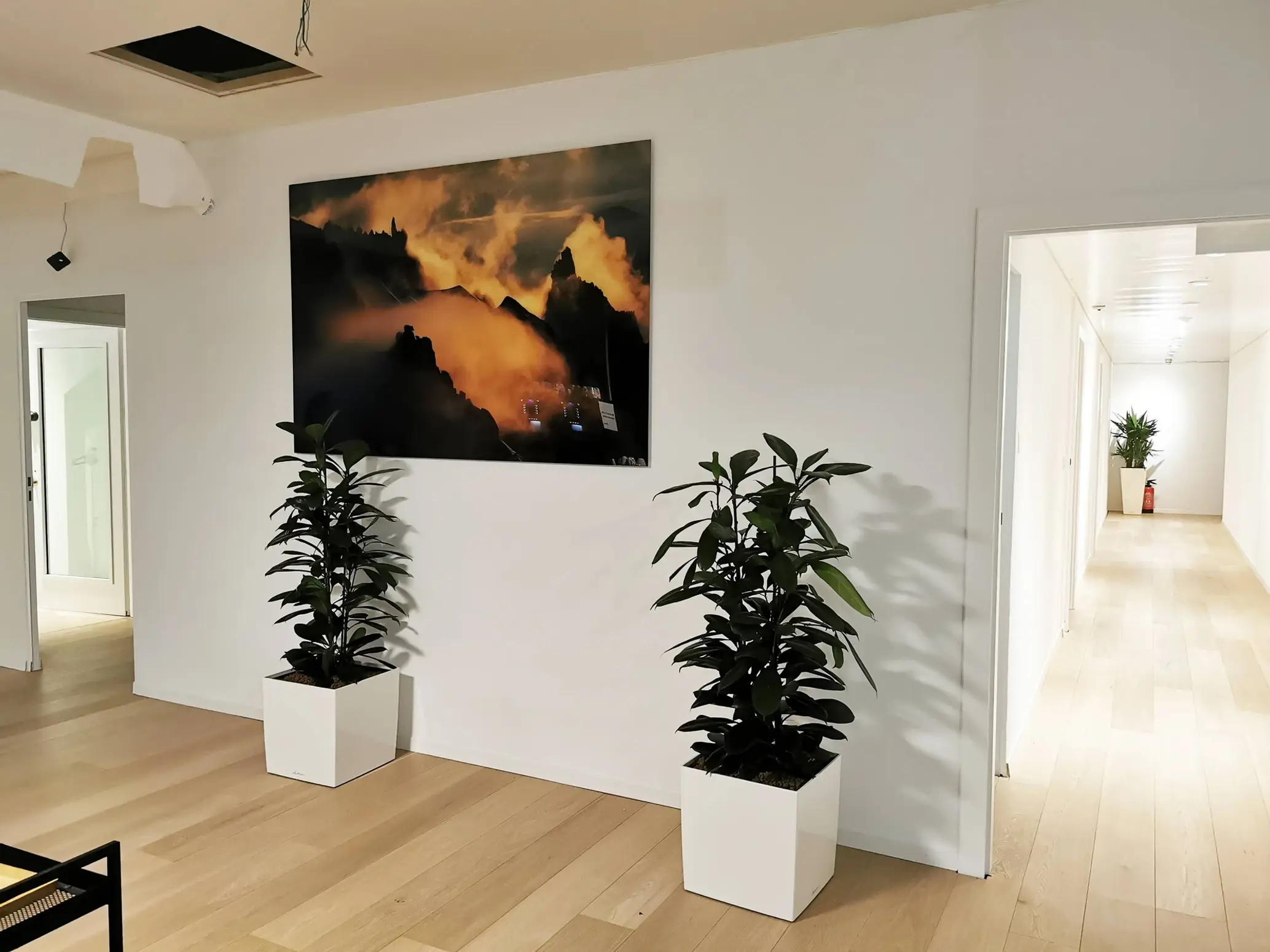
Ficus Elastica
Also called rubber plant (a robust and resilient plant), the ficus elastica does not need light and withstands quite cold temperatures. It prevents mold and eliminates carbon monoxide. This widely spread plant is characterized by its imposing size and the appearance of its leaves. To enhance this plant, use a cache-pot or a basket, but be careful not to move it, as it does not tolerate change.
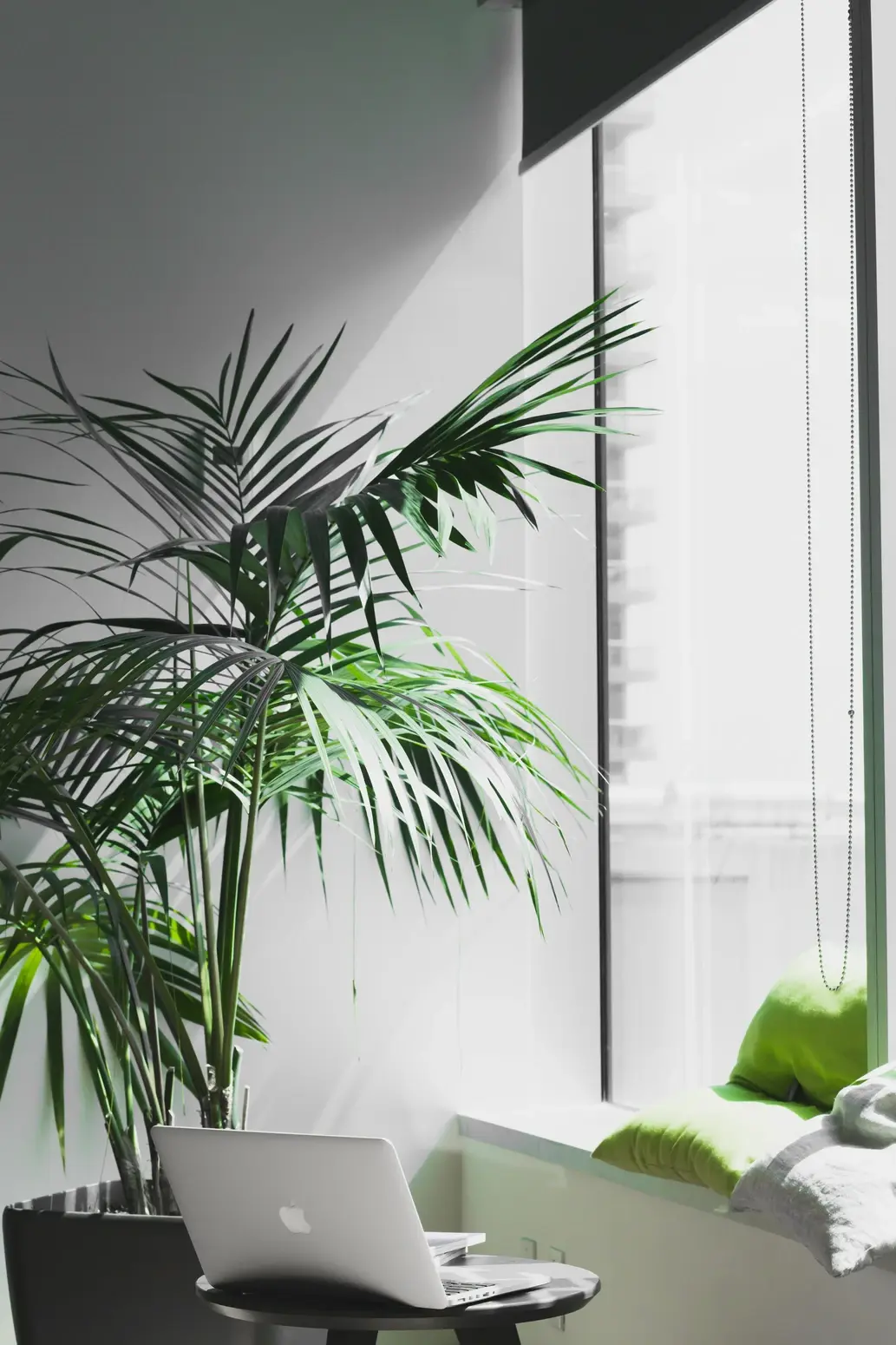
Chrysalidocarpus Palm
A tropical plant, the palm can reach up to 2 or even 3 meters high (ideal for partitioning space if you work in an open space). Its elegant foliage will bring a touch of exoticism to your interior space. It requires very good light and does not tolerate temperatures below 18 degrees. It eliminates xylene and formaldehyde present in construction materials.

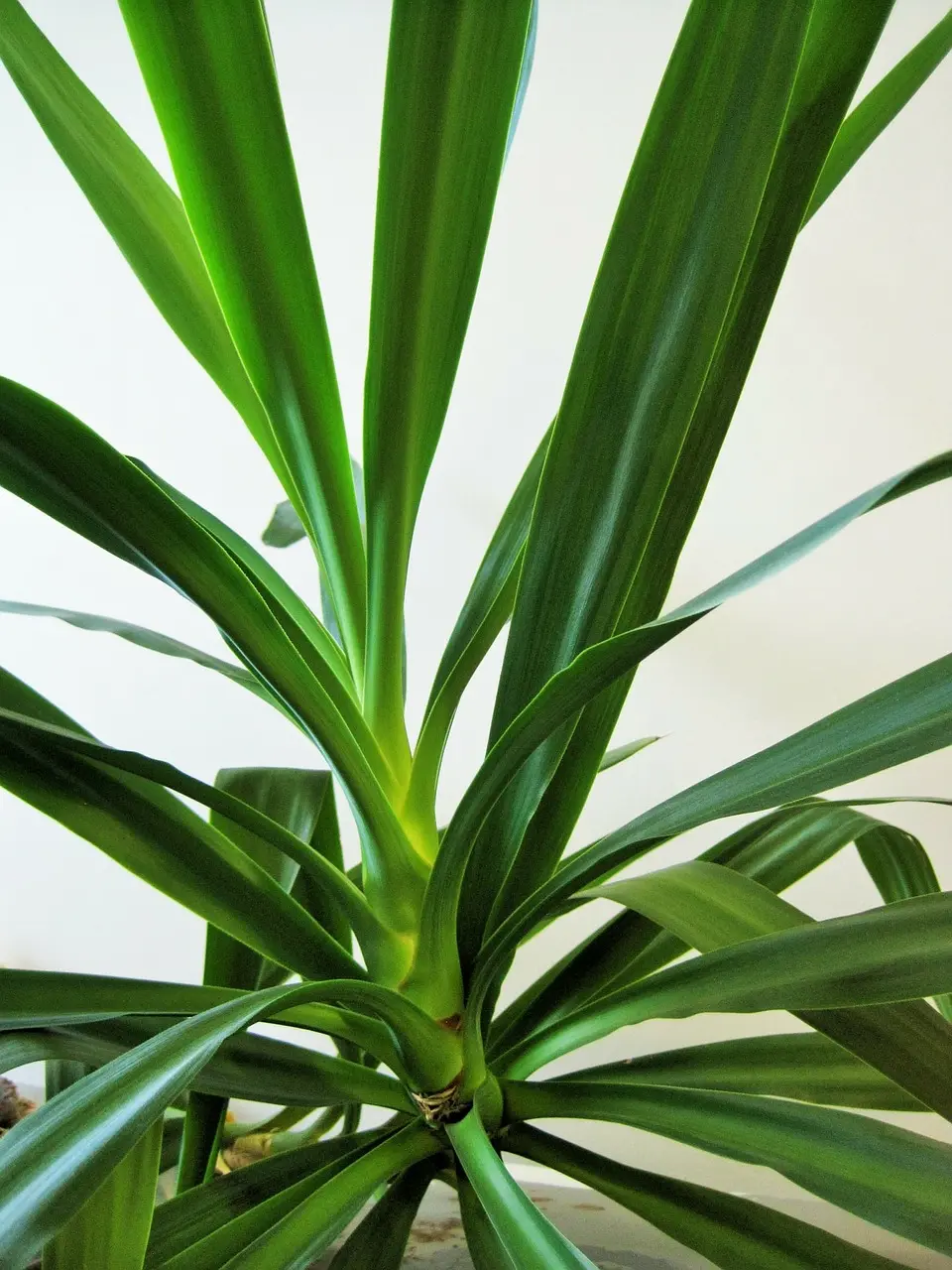
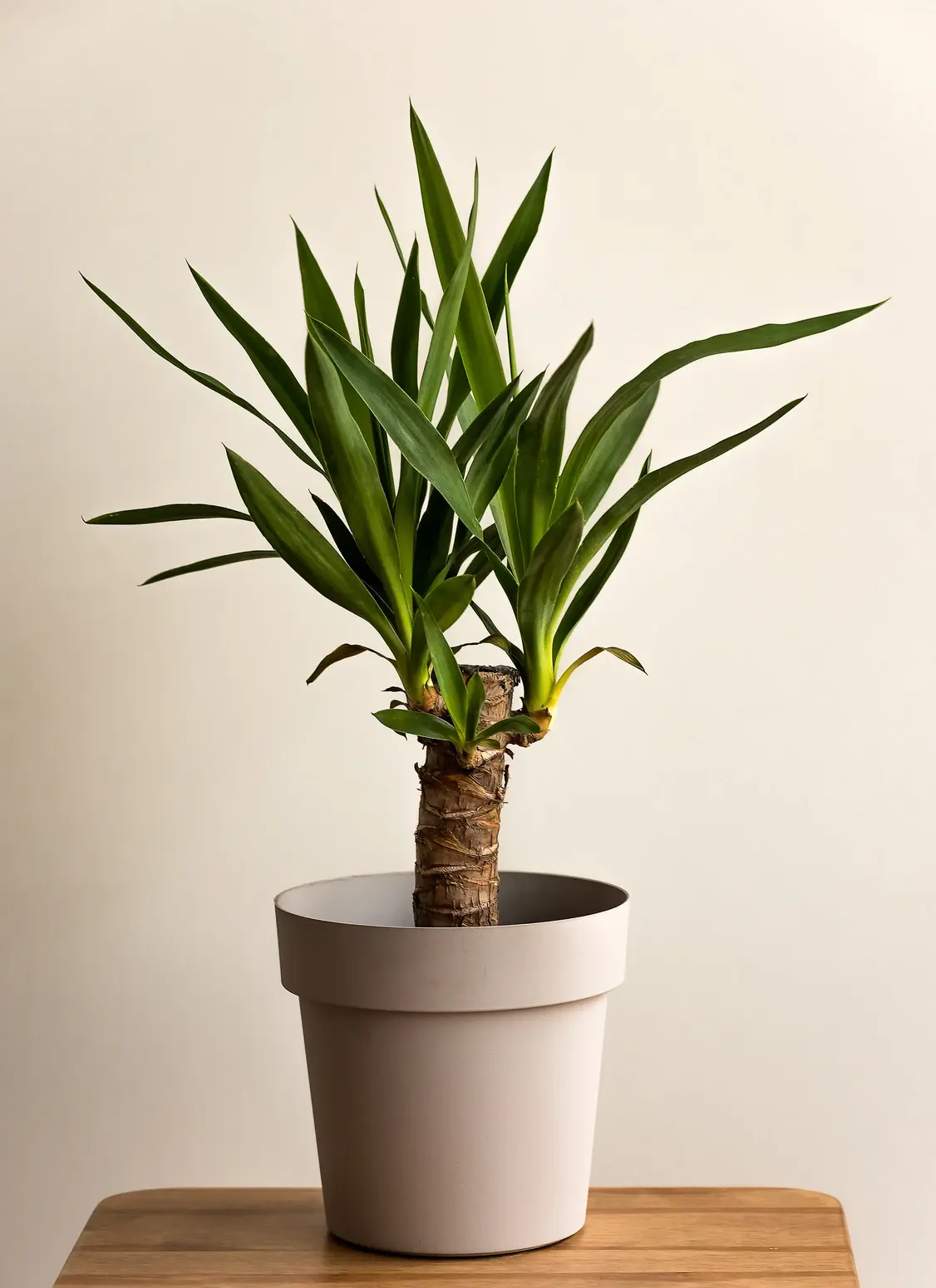
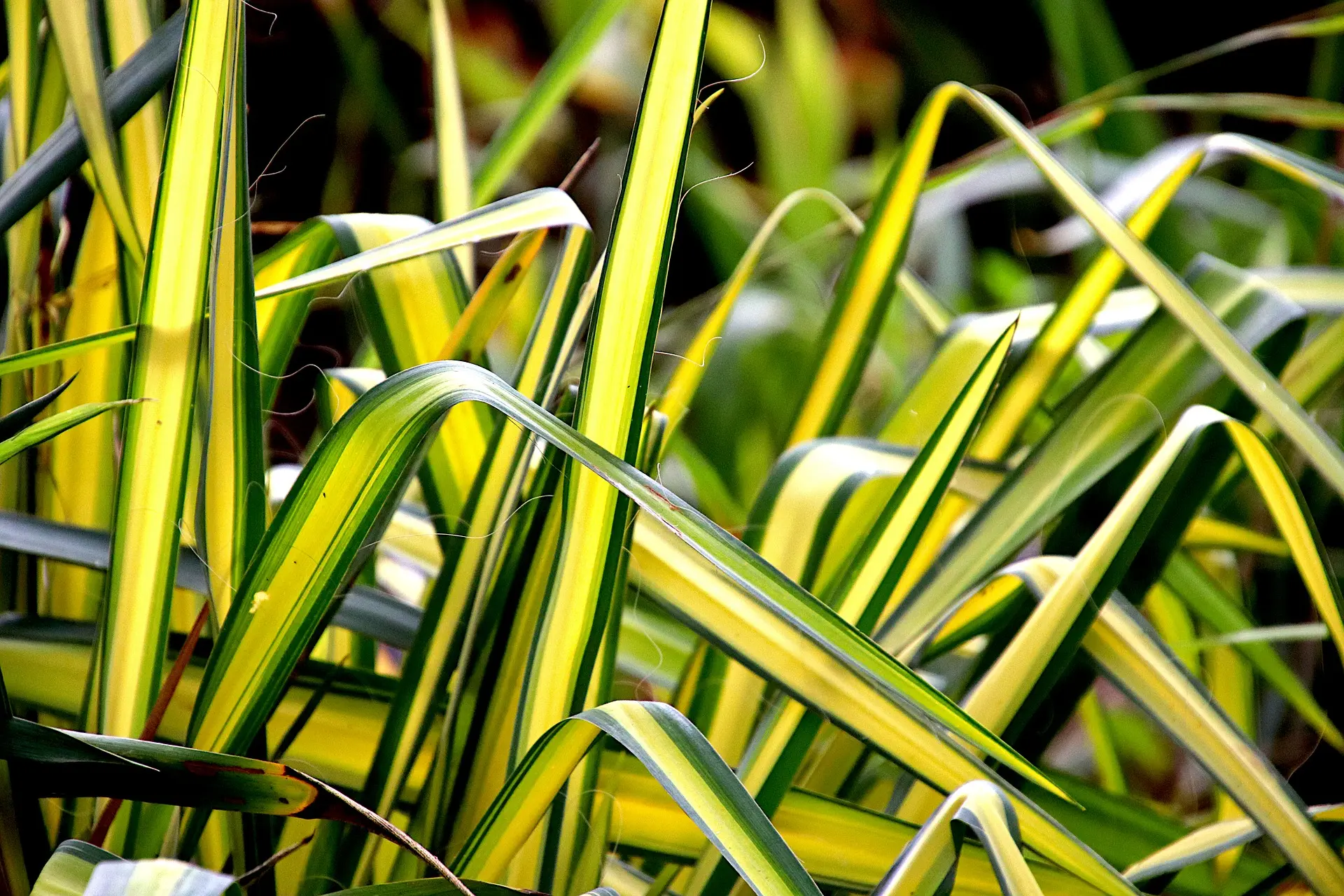
Yucca Elephantipes
Generally in a pot, the yucca requires strong exposure to full sun and demands quality soil. The ideal temperature is between 18 and 22 degrees. Occasionally, dust the leaves with a damp cloth. This timeless plant offers greenery in any room throughout the year. Its long leaves are effective in dealing with pollutants like ammonia or benzene.
Plants with good light exposure
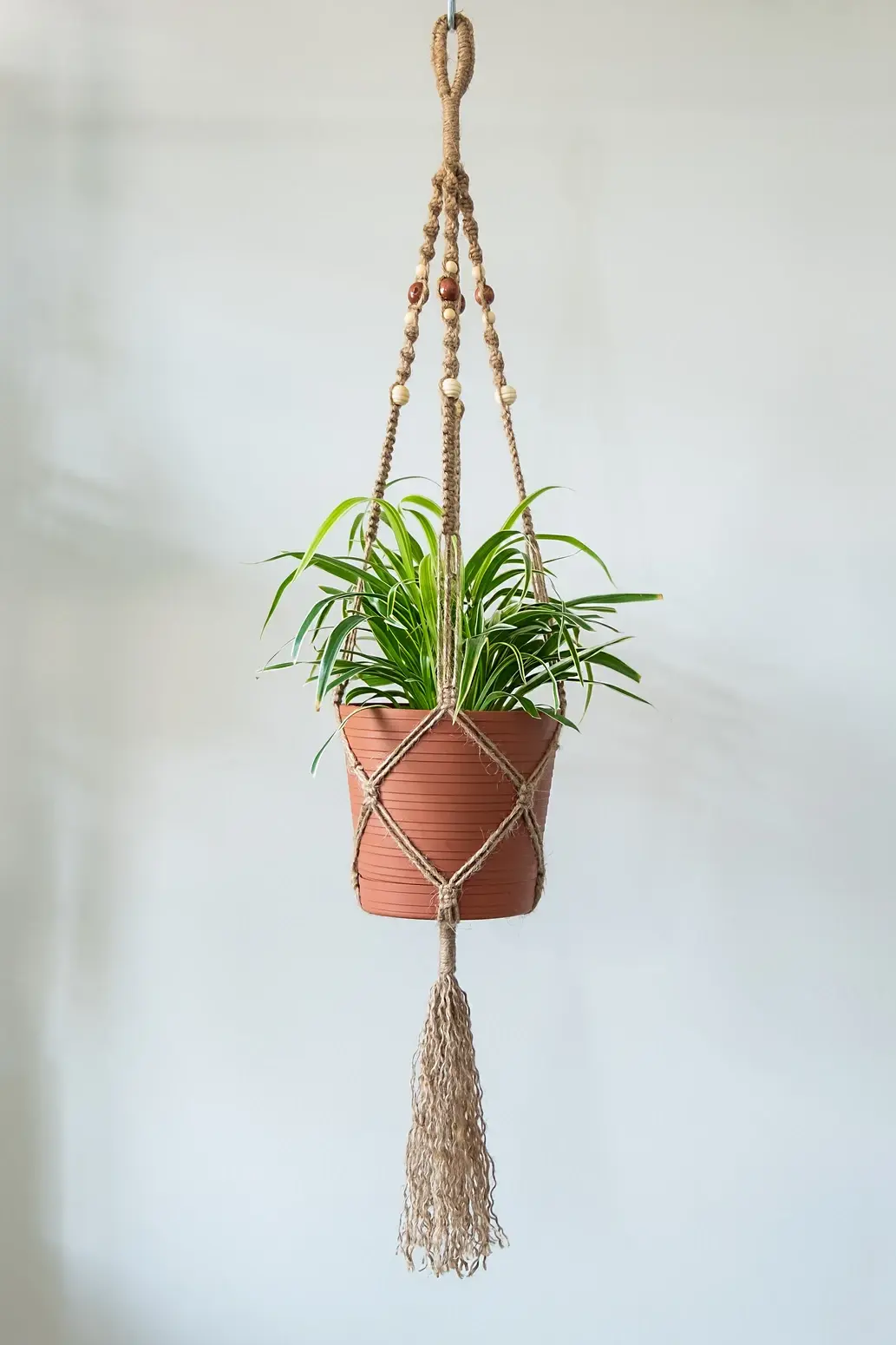
Chlorophytum
Also known as spider plant, this plant is distinguished by its long, flexible, and elegant leaves. A champion of indoor air purification, it removes carbon monoxide, making the air healthier. Generally in a pot, chlorophytum can be hung to conceal installations you do not wish to show. Easy to care for, this plant needs bright light, but without direct sunlight and adapts to indoor temperatures. The more it is exposed to a window, the more its foliage will be vibrant. Finally, this plant tolerates drought better than excess water.
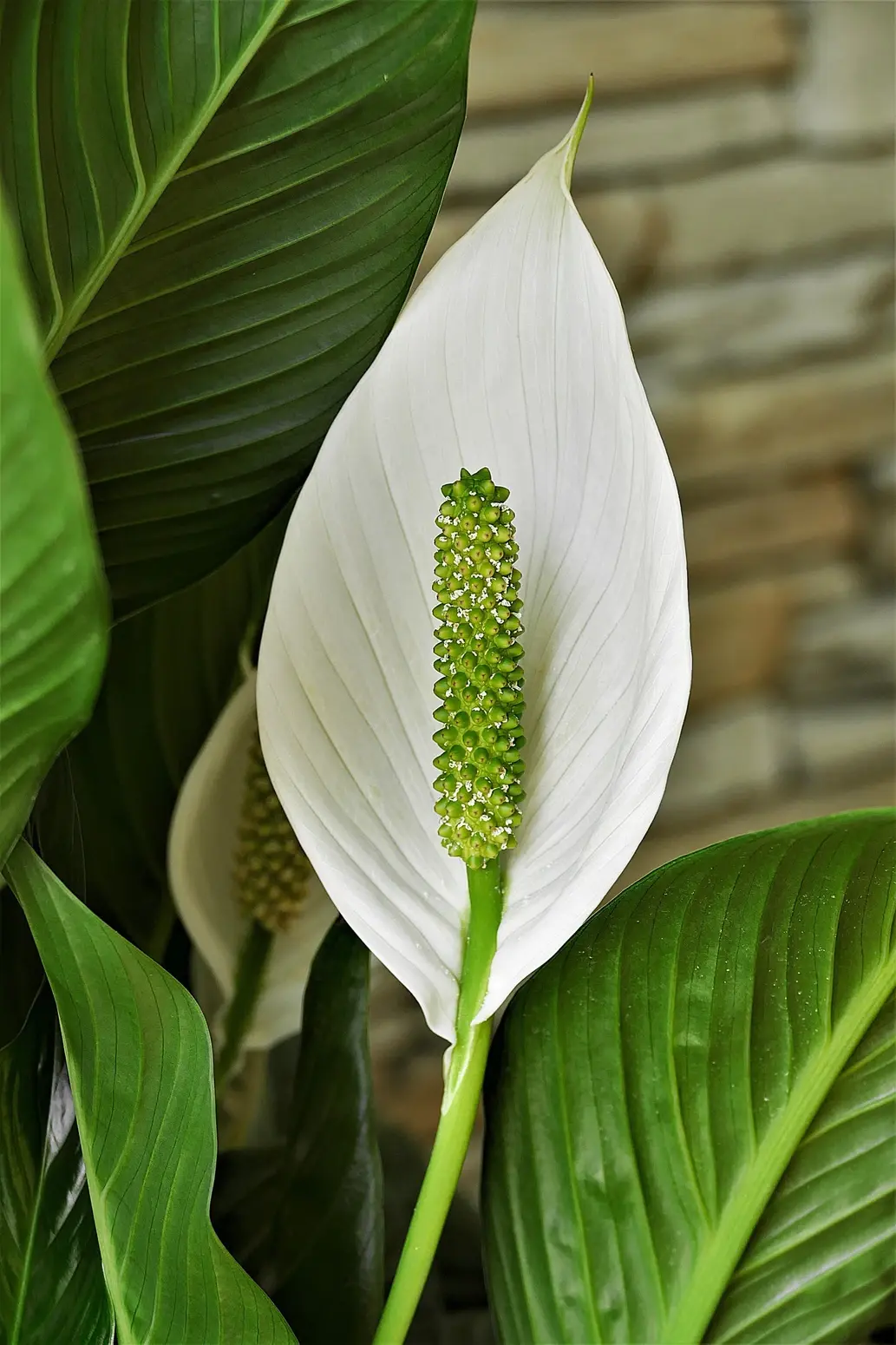
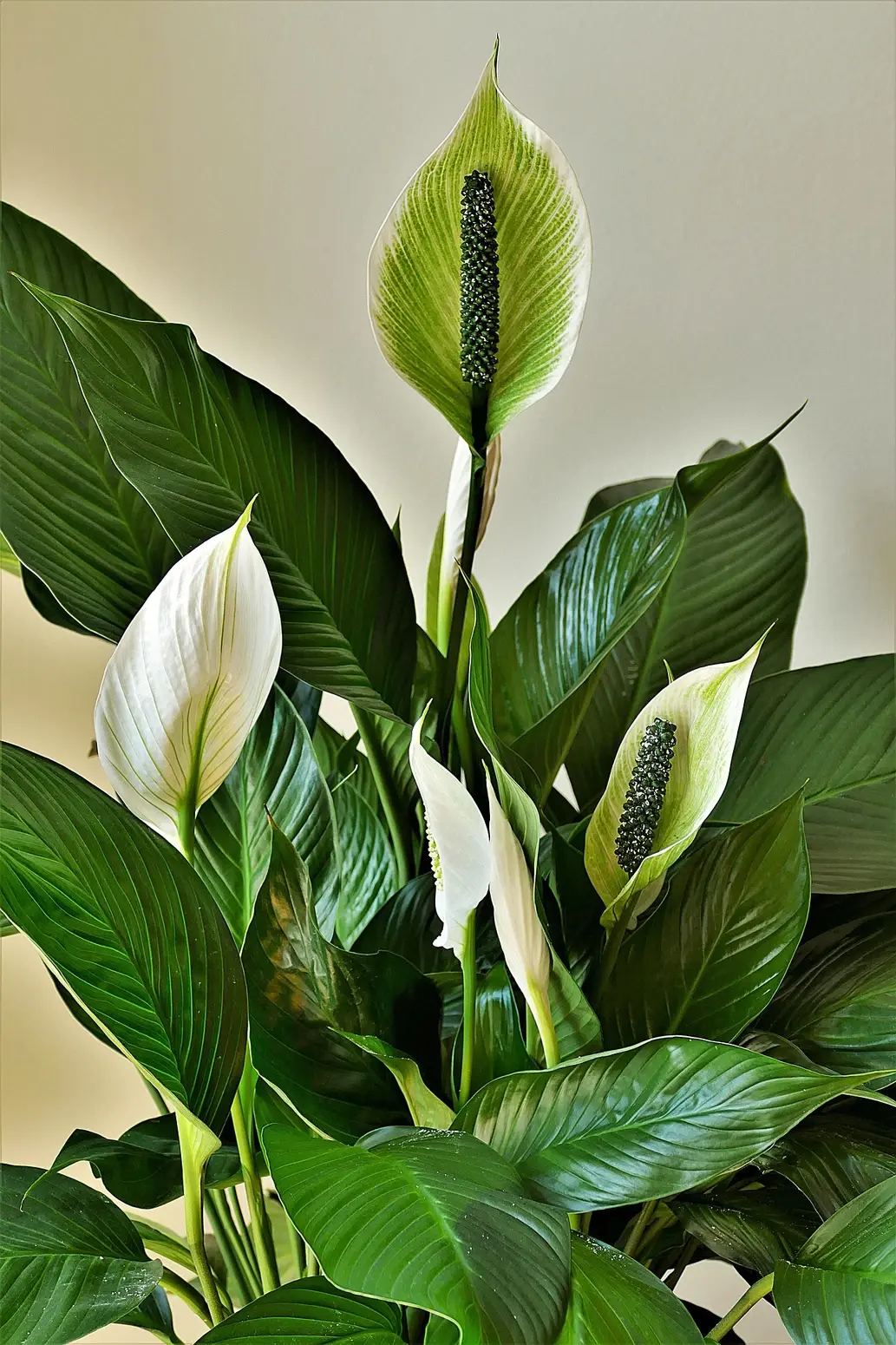
Spathiphyllum
Of exotic origin, this attractive plant fears direct sunlight, but needs excellent light. The spathiphyllum is distinguished by its long leaves and cream-white flowers. It easily adapts to our interiors and thrives when temperatures are around 20-22 degrees. In a pot, in a container, or even on a living wall, this plant blooms all year round, especially in summer and autumn. Finally, it absorbs a large number of pollutants such as benzene, trichloroethylene, or xylene.
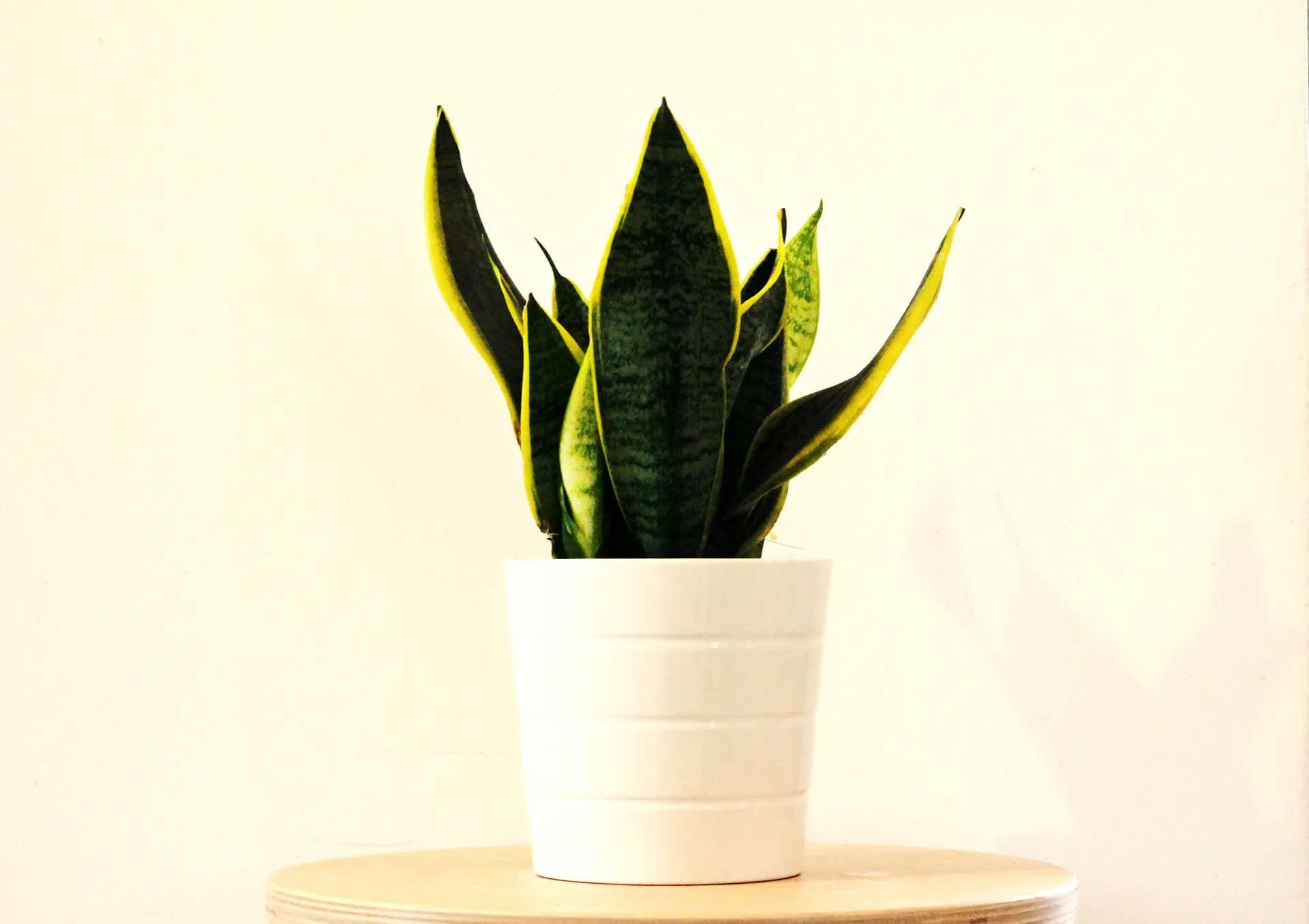
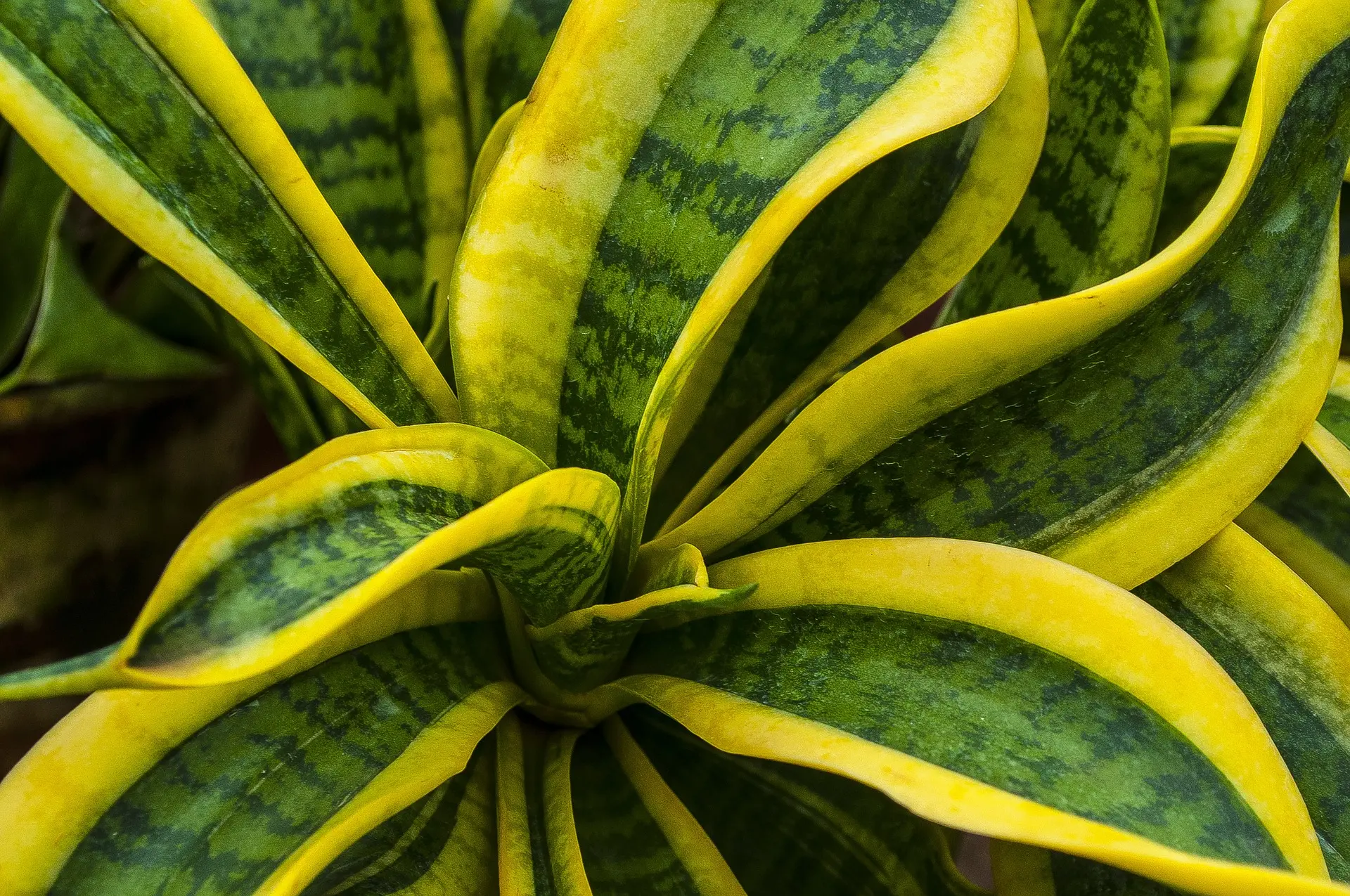
Sansevieria
This suculent plant requires a good light exposure, but can adapt to partial shade. It regulates ambient humidity: it absorbs carbon dioxide and releases oxygen. The sansevieria does not require much watering, but needs rich soil. It is the ideal plant for a corner of the office, as it survives heating, air conditioning, and missed waterings.
Colorful plants
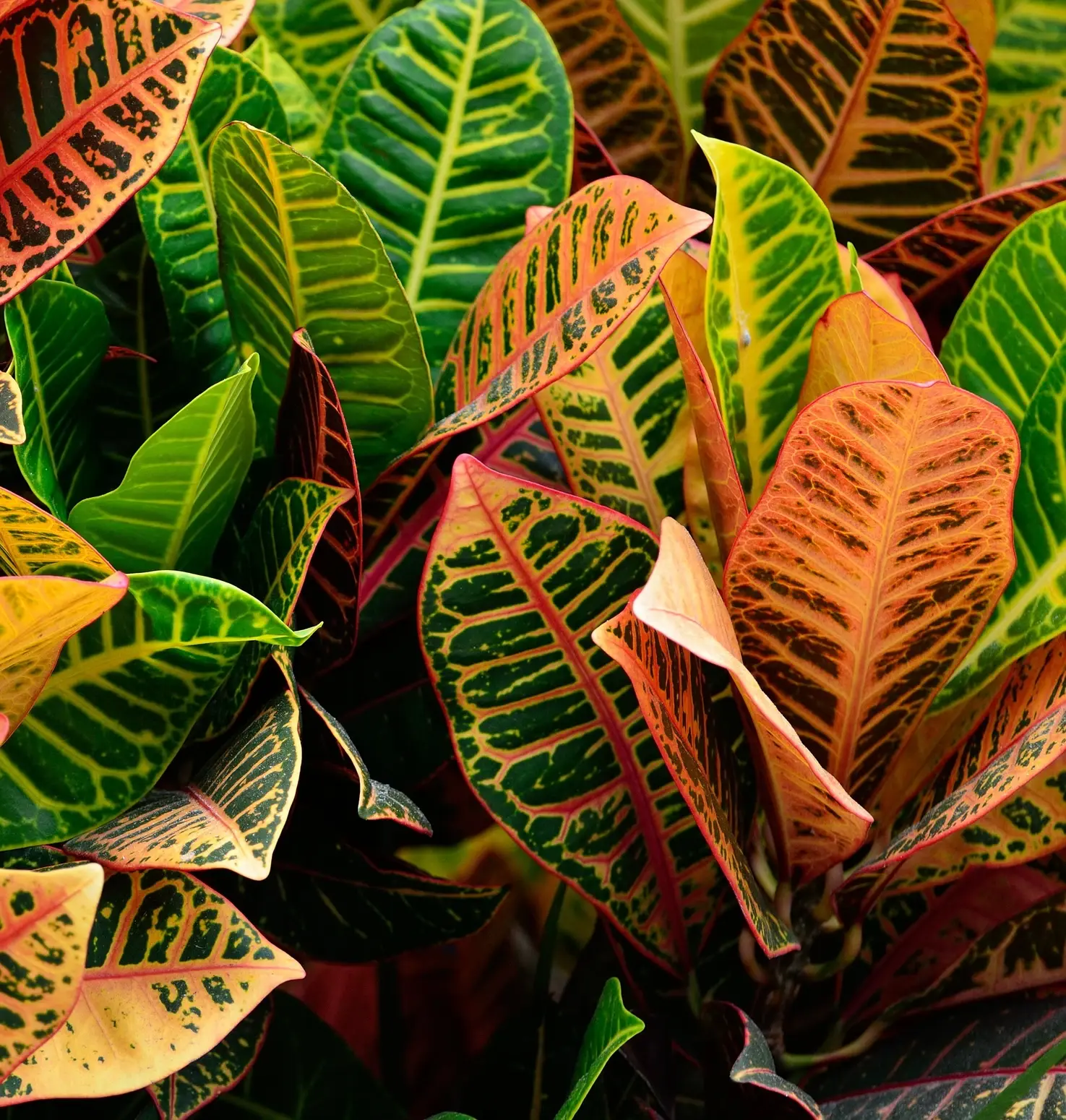
Croton
Originating from Malaysia, this plant is perfect for adding brightness to your office or decorating a rather dark hallway if the plant is large and imposing. It is recognizable by its brightly colored leaves such as yellow, orange, or purple. A strong brightness is essential to maintain the beauty of its foliage, but be careful not to expose it directly to a hot spot like a radiator, as the croton loves humidity. It eliminates formaldehyde present in certain paints or carpets.

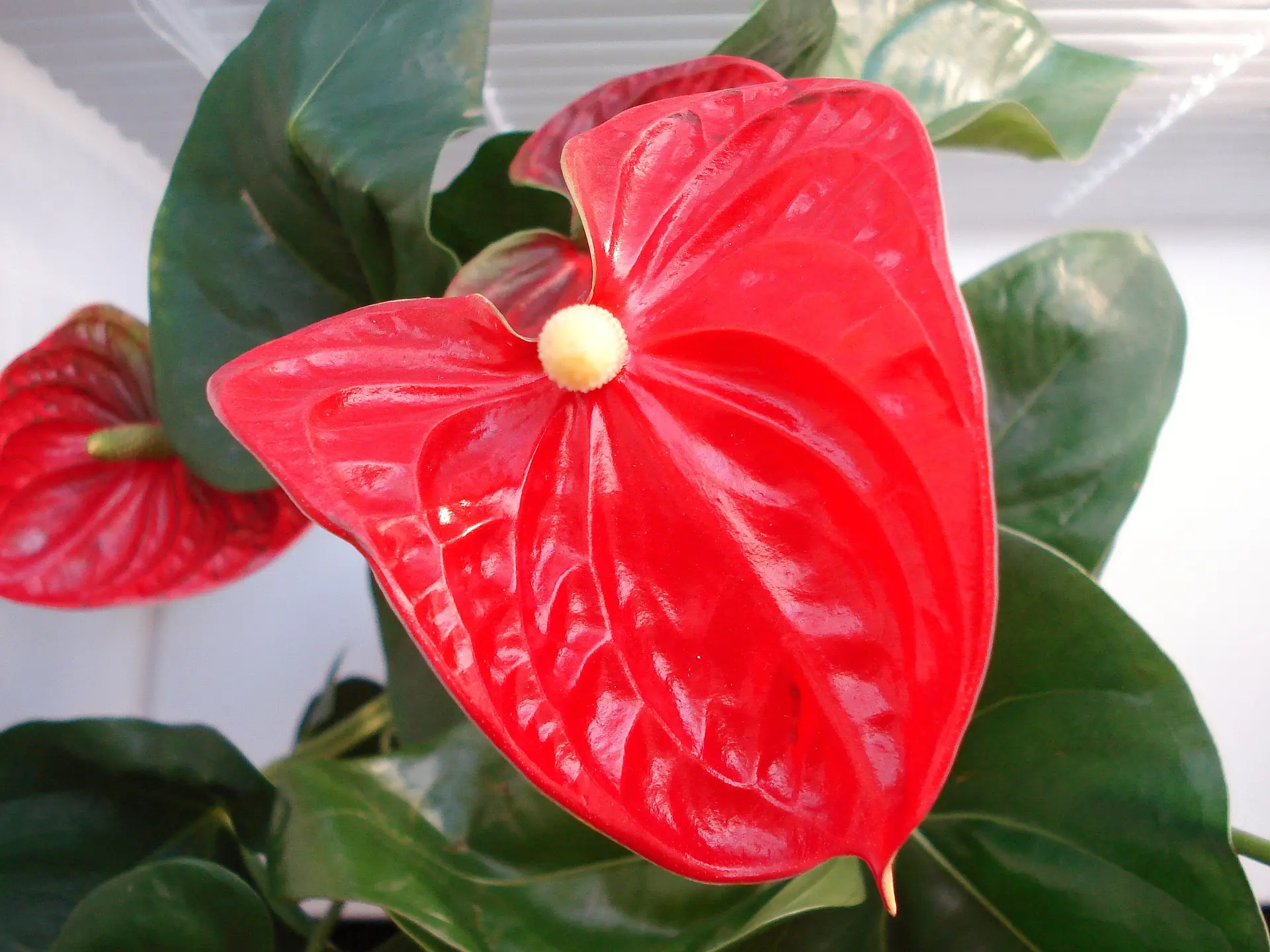
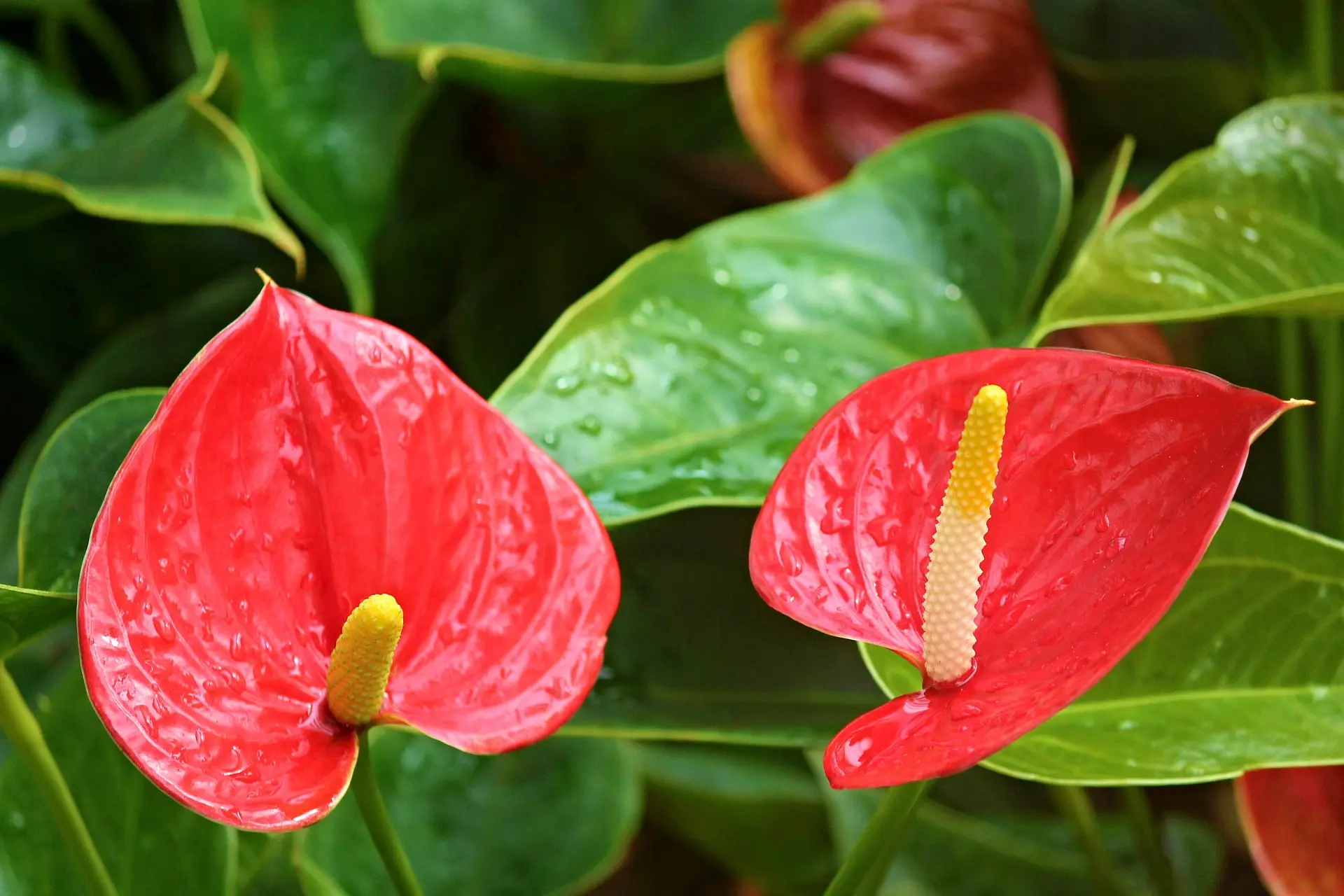
Red Anthurium
Very similar to the spathiphyllum, this plant stands out by the color of its leaves, here red, although other species have different colors like white or pink. Its flamboyant flowering occurs in winter: humidity, warmth, and light are the keywords. Its foliage allows you to benefit from the air-purifying properties of ammonia.
The hydroponic process for your plants: easier maintenance
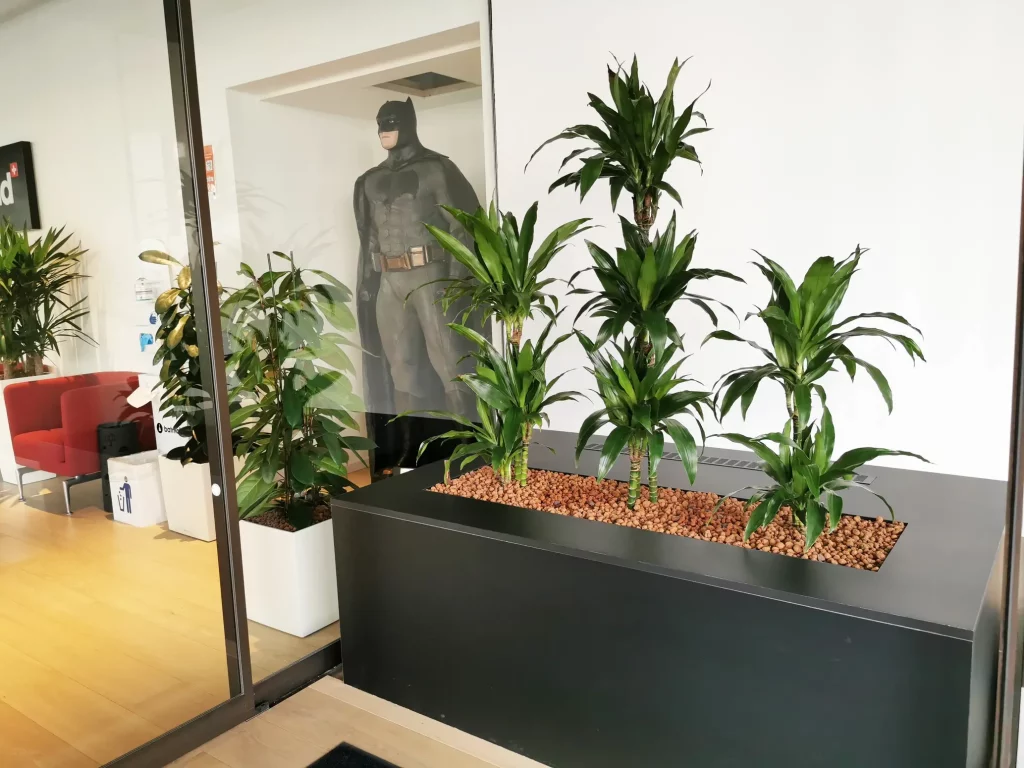
At Végétal Tendance, we think of you. How about having fresh and graceful plants without too much care? We use the hydroponic process, which involves placing plants in pots filled with clay balls soaked in water. The plant roots will draw the water and nutrients necessary for their proper development. Watering is therefore less frequent, even for the most demanding plants.
The limitations of air-purifying plants
Indoor plants do not perform miracles. As we have seen earlier, they absorb and transform some pollutants, but there is no zero risk. Daily actions must be maintained: regularly ventilating spaces by opening windows, maintaining the ventilation system, and choosing healthier household and DIY products.